A technical sheet is the most structuring document in a pastry lab, and yet the most often neglected. Without one, every production run depends on one person’s memory. With one, your recipes become transferable, your costs controlled, and your quality consistent. Here’s how to build a genuinely professional technical sheet.
What a Technical Sheet Actually Does
A technical sheet isn’t a simple recipe. It’s a single reference that brings together the exact quantities, costs, processes and control points of a product. It answers three major needs: reproducing a product identically regardless of who’s making it, calculating a reliable cost price, and passing on know-how without loss. A lab that works without technical sheets loses considerable time re-explaining, correcting, and clarifying what should have been written down once and for all.
The Indispensable Elements of a Pro Sheet
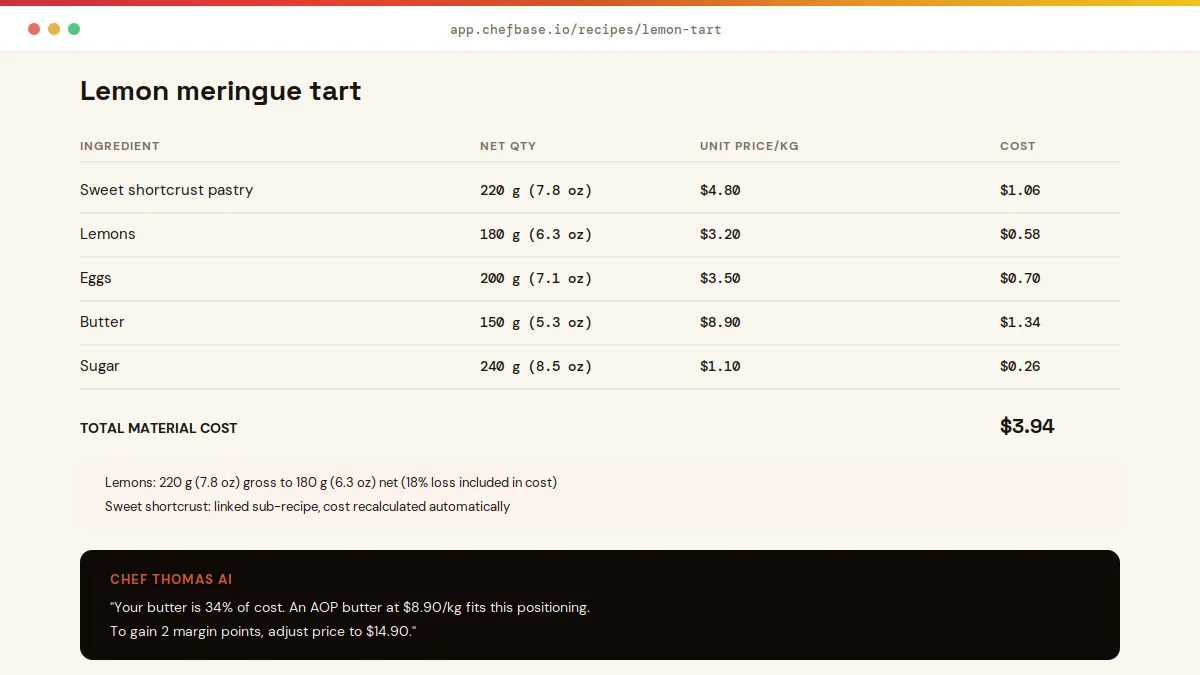
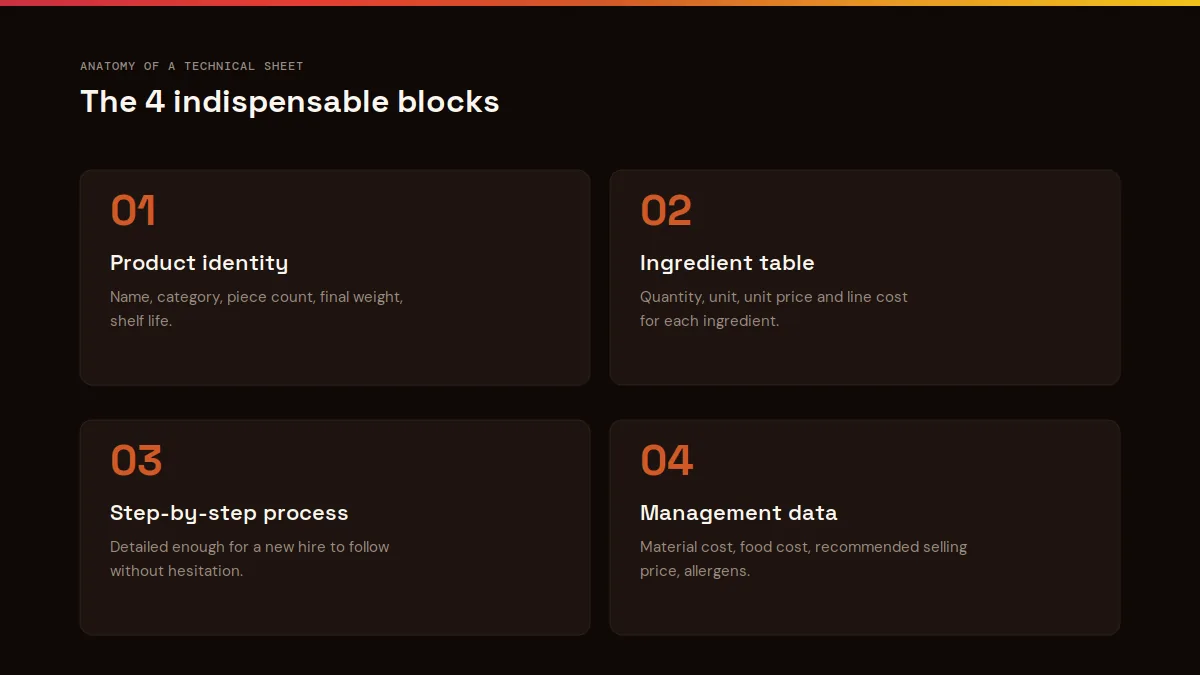
A complete technical sheet is built around four blocks. Product identity first: name, category, piece count or final weight, shelf life. The ingredient table next, with the precise quantity, unit, unit price and line cost for each item. The production process step by step, detailed enough for a new hire to follow without hesitation. Finally, the management data: total material cost, food cost, recommended selling price and allergens.
Structure Your Quantities and Yields
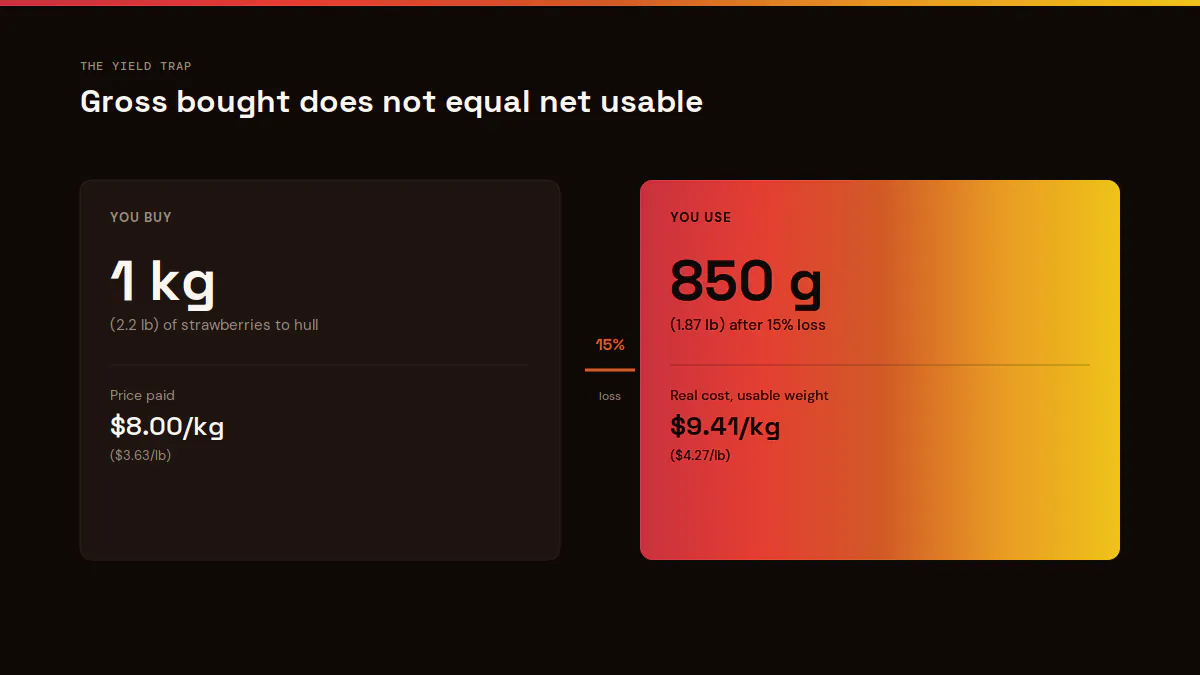
The core of a reliable technical sheet is precision in quantities. Always work in grams, never in approximate volumes. State the gross quantity purchased and the net quantity actually used, because the gap between the two changes everything. A kilo (2.2 lb) of fruit to hull doesn’t yield a kilo (2.2 lb) usable. Build these yield coefficients directly into the sheet, or your costs will always be underestimated.
Also think in sub-recipes. A cream, a sponge or a glaze used across several products deserve their own sheet, which you then call into your final recipes. This modular logic saves you valuable time and keeps costs consistent across your entire range.
Build Food Cost Into Every Sheet
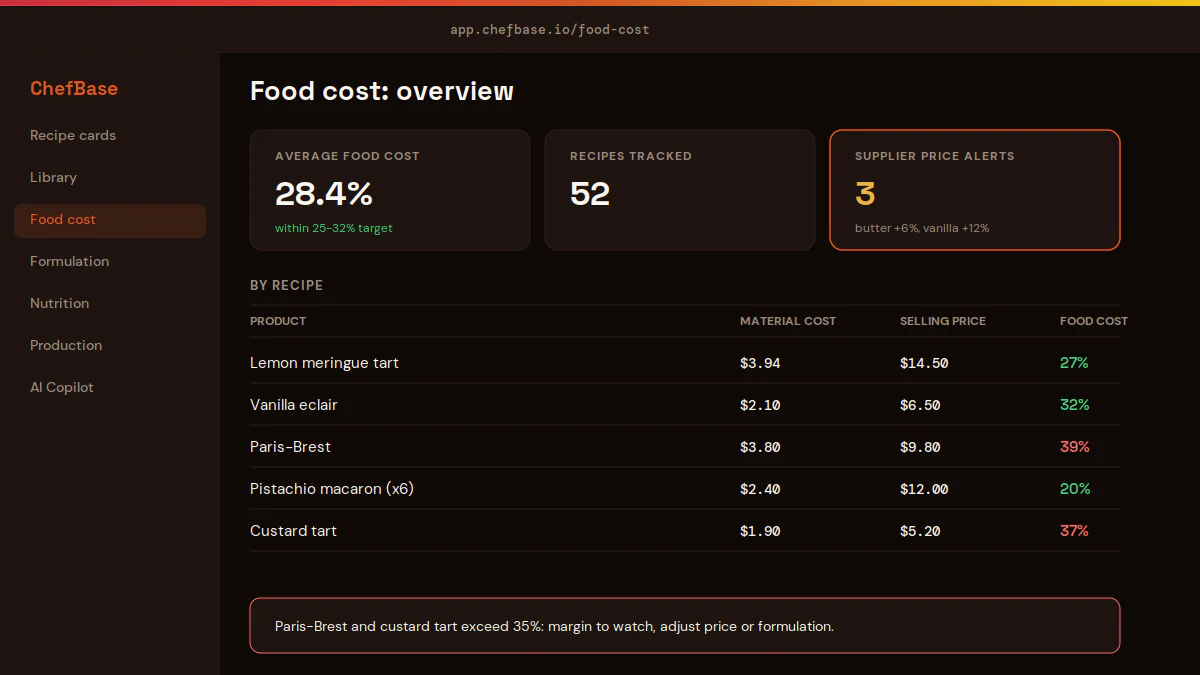
A technical sheet without a material cost stays incomplete. Every ingredient line needs its cost, and the sheet must display the total material cost as well as food cost as a percentage of the selling price. In artisan pastry, a food cost between 25 and 32% stays healthy. Beyond 35%, your margin no longer covers fixed costs. If this topic interests you, we covered it in detail in our dedicated article on calculating pastry food cost.
The value of centralized tracking shows up as soon as you manage several dozen recipes: you spot at a glance which products have drifting margins and which ingredient just went up in price.
Blank Template or Dedicated Software
Many chefs start with a blank template in Excel or Word. It’s a good starting point to understand the structure, but this approach quickly shows its limits. The moment a supplier price changes, you have to update every affected sheet by hand. Multiply that by fifty products and tracking becomes unmanageable. Dedicated software updates all your costs automatically the moment an ingredient price moves, and keeps a history of your versions.
This is exactly what ChefBase does: you enter your ingredients and recipes once, and the platform calculates the cost of each sheet in real time, applies yields, manages sub-recipes, and flags the impact of a price change on your margins. The Chef Thomas AI copilot even suggests optimization ideas directly on the sheet.
Key takeaway: a technical sheet isn’t an administrative burden, it’s the tool that makes your lab reproducible, profitable and transferable. Invest the time to structure it properly once, and you get it back every single day.